This is the single most-important thing you can do to extend the life of your water heater.
Standard “sacrificial” anodes (aluminum, zinc) are designed to deteriorate before the steel tank.
Powered anodes (titanium) do not deteriorate and instead supply small electrical current that prevents the steel tank from rusting, leaking, bursting.
It replaces the standard anode in most tanks. An alternate version is available for the commercial quality Bradford-White water heaters.
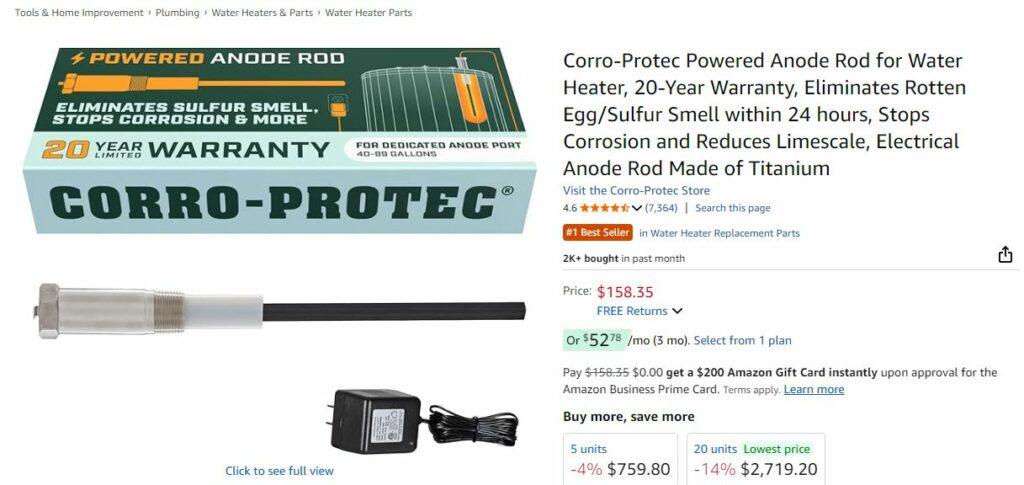
This socket is for removing the old sacrificial anode. https://amzn.to/49qD8CA
This socket is for installing the new powered anode. https://amzn.to/49xGHag
This is a ball-valve to upgrade the drain. https://amzn.to/3LGEMIn
Power anode (powered anode rod) for a water heater — what it is & why it matters
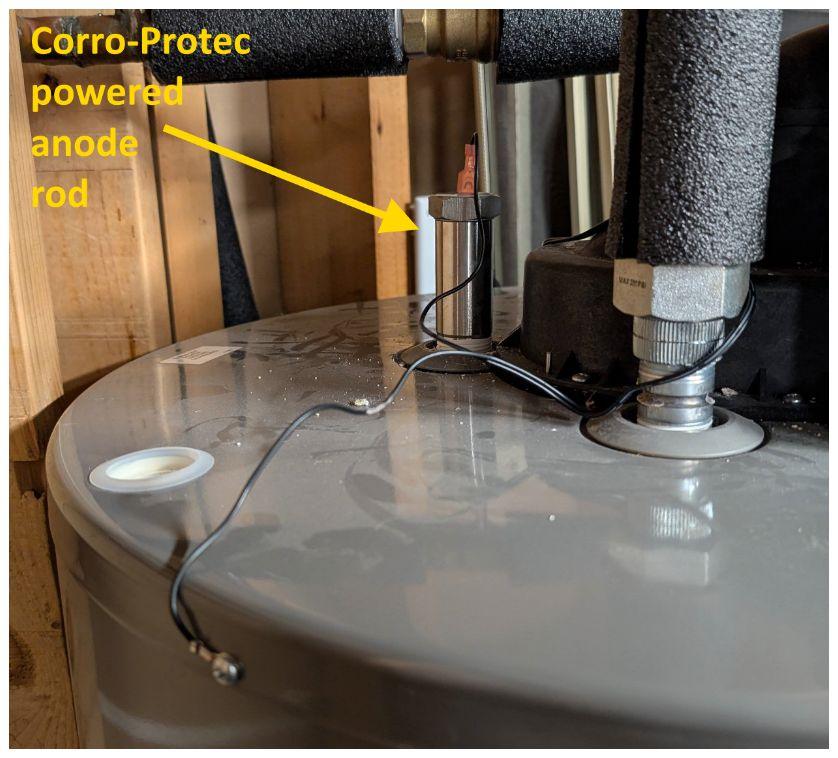
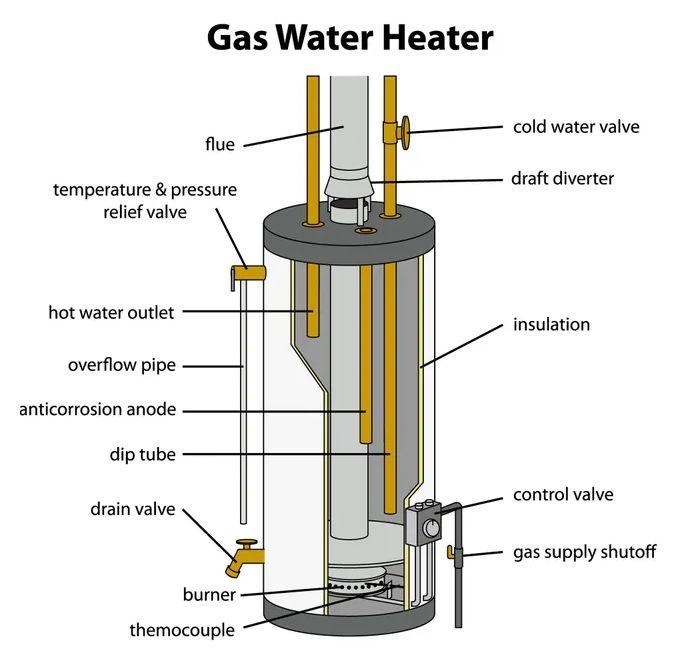
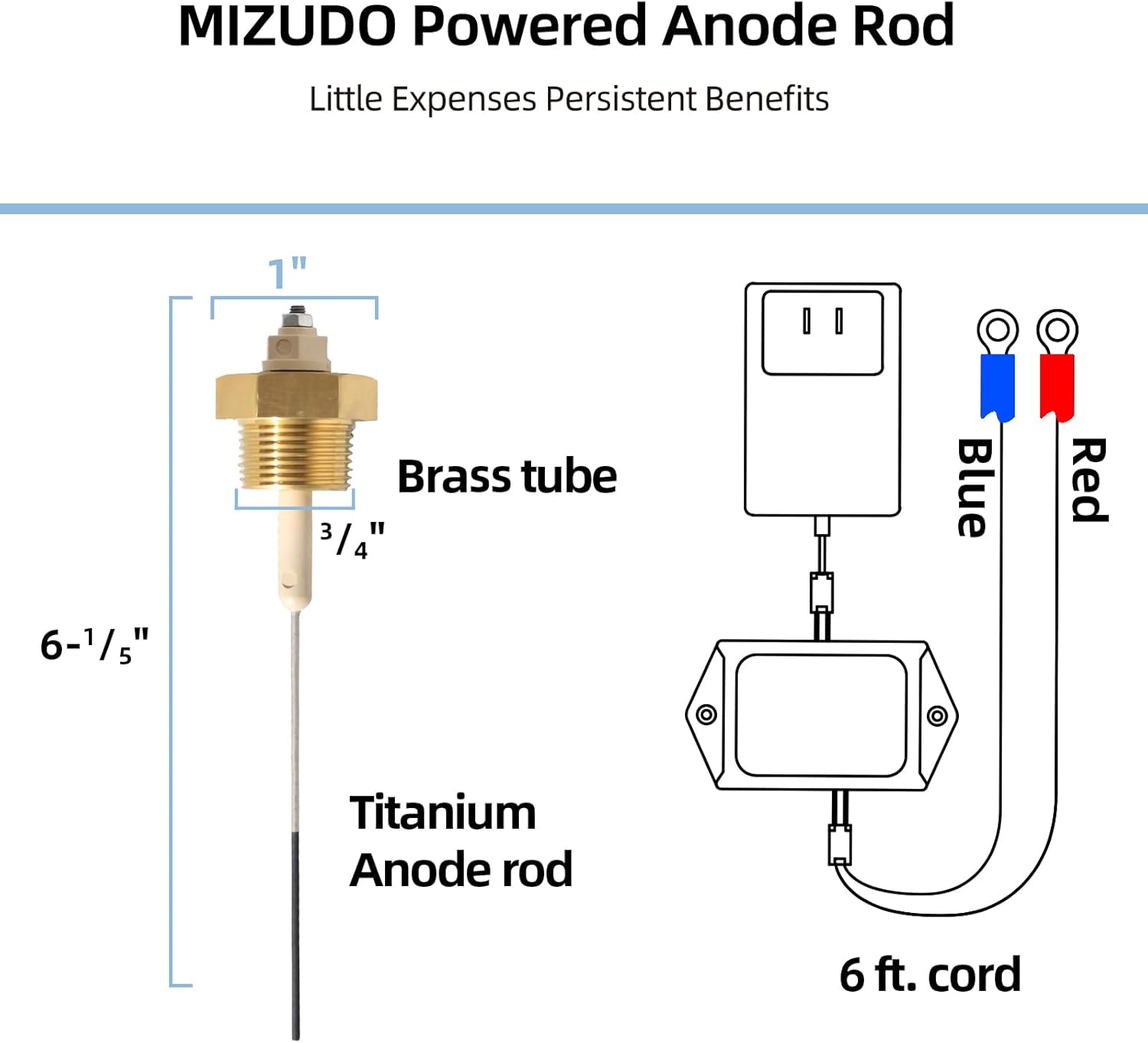
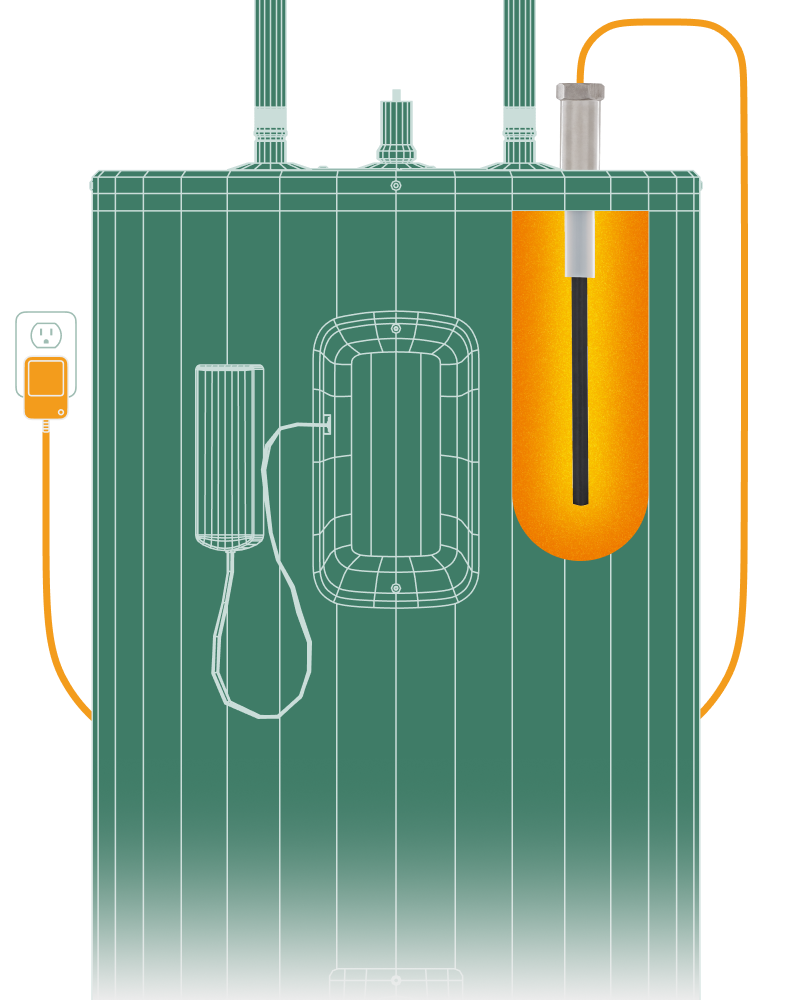
What a power anode is
A power anode (also called an impressed-current anode) is an electronic corrosion-protection rod that replaces the traditional sacrificial magnesium or aluminum anode inside a tank water heater.
Instead of being eaten away, it uses a low-voltage electrical current to stop the steel tank from corroding.
How it works (simple)
- Sacrificial anode: corrodes first → eventually disappears → tank rusts next.
- Power anode: sends a tiny current that prevents corrosion altogether → the rod does not get consumed.
Think of it as active corrosion control rather than “burning up” metal.
Why people install power anodes
1. Dramatically extends tank life
- Prevents rust even after years of service
- Especially valuable for long-life tanks like Bradford White
- Many users see +5–10 years of added service life
2. Eliminates “rotten egg” sulfur smell
- Stops the magnesium–sulfur reaction that causes hydrogen sulfide odor
- Often the only permanent fix for smelly hot water
3. No maintenance
- Sacrificial rods need inspection every 3–5 years
- Power anodes do not wear out
4. Ideal for hard or aggressive water
- Handles chloramines, softeners, low-pH water better than standard rods
Downsides (important to know)
- Costs more upfront (usually $120–$220)
- Requires a nearby electrical outlet
- Electronics can fail eventually (rare, but possible after many years)
Compatibility with Bradford White
Yes — power anodes work very well with Bradford White tanks, including gas and electric models.
Important notes:
- Most Bradford White tanks use a ¾” NPT anode port (often combined with hot outlet)
- Some models hide the anode under a cap or nipple
- Warranty is typically not voided by an anode replacement, but confirm with your installer
Popular, proven power anode options
⭐ Corro-Protec
- Most widely used brand
- Titanium rod with control module
- Excellent odor elimination
- Common choice for Bradford White upgrades
Other reputable options
- Rheem powered anode kits (model-specific)
- A. O. Smith powered anode (OEM or retrofit)
- Universal titanium impressed-current anodes
When a power anode is absolutely worth it
- You plan to keep the house 10+ years
- You already own a Bradford White and want maximum lifespan
- You have hard water or sulfur odor
- You want set-and-forget corrosion protection
Bottom line
A power anode is one of the best upgrades you can make to a tank water heater.
For Bradford White owners especially:
- It complements the already heavy-duty tank
- Can realistically push service life toward 20+ years
- Eliminates odor and maintenance headaches